C'est Belle
from A Jolly AffairBeing beautifully natural
For too long, the definition of beauty seems to revolve around perfection. It’s time to embrace a new mood of realism and celebrate natural flaws of nature be it freckles, wrinkles or other superficial blemishes.

Scandinavian model Julia Hafstrom
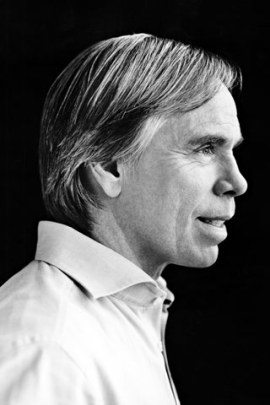
Tommy Hillfinger
The Extraordinary V Conference 2009



Irene Ang’s V Conference is a rare satirical performance that is uniquely Singaporean. I am delighted to be able to catch her third installment “The Extraordinary V Conference” on its opening night. How often do you get a show where politicians and celebrities are cleverly impersonated to a hilarious effect, not so much to make a fool out of them, but to offer a different perspective to otherwise straightforward issues that we read about in the news?
Irene Ang is quick-witted yet naturally accessible, which made her stand-up engaging because it is easy to connect with her.
Credit goes to the cast whose commitment to their roles were not compromised by the intense quick-changes throughout the show. From Pussycat Dolls to nyonyas to famous politicians, the multi-ethnic, multi-racial caricatures of Singapore were not left out too.
While the boundaries were pushed rather boldly in segments with the ambassador for Pro-family campaign and the Malaysia-Singapore face-off, the rest were danced through and parodies involving local celebrities were dealt with caution.
For instance, the Little Nyonya segment was not the least bit offensive and I was expecting something more biting, to the effect of how perhaps rape is an over-used tactic to tug at heartstrings, and perhaps (gasp!), the reason why I won Best Actress! Possibly the worst thing I heard that night was referring me one of “the nyonya sluts”, but that wasn’t anything I would gripe about.
The face-off between the Ah Jies began with a verbal cat-fight that threw some good punches, but that was short-lived and fizzled out with a convenient happy ending that seemed a little too politically correct.
And we all know Patricia Mok loves LV. But we also know there’s more drama to her than just having to have the latest LV bag from the latest glitzy Ion shop. So while I enjoyed the improvised rendition of “Nobody” by Wondergirls that came out of this, it was just the usual fare seasoned with a bit more song and dance.
The Extraordinary V Conference is like the funny mirrors you get in the amusement parks. You come face to face with the less than perfect side of yourself, some might laugh over it, others would just walk away disgusted at the reflection, but you’ll never go to the operator and demand for them to remove the mirrors or make them alter your reflection. If any offense is taken by those whose personalities were showcased, I would say “chill-lax”, it’s all done in the name of fun and humour.
Let’s just all have a good laugh at ourselves, if applicable.
The Extraordinary V Conference (R18) is playing from now until Sept 13, 8pm at ZIRCA (Block 3C, The Cannery, Clarke Quay). Tickets are available from SISTIC counters. Call 6348-5555 or book online at http://www.sistic.com.sg.
MOON starring Sam Rockwell

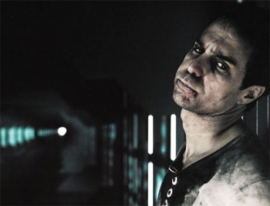
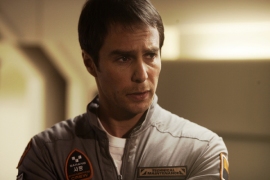
It is a bold move to centre an entire movie around one protagonist located in one place, because the movie is the man, is the mining base on the Moon.
Once in a while you get a movie like “Moon” starring Sam Rockwell, where the same-old corporate-villiany story is made different by the way it’s told.
It was a claustrophobic experience for me because just imagine what is a man to do to occupy himself while being out on the moon on a 3 year contract? Running on a treadmill? Talking to plants? Recording messages for his wife and daughter to be sent back to Earth? Okay, so once in a while he gets to go outside, traveling in a vehicle that resembled a more advanced modification of Flintstone’s automobile, so as to harvest Helium 3 from another machine. He would then return to base, pop the canister in a shuttle that will catapult itself back to Earth. But imagine doing that for 1095 days.
Ultimate boredom.
But of course, something dramatic must happen, which provides great premise to stretch Rockwell’s performance. As I try to figure out what the huge conspiracy is, what stood out was not the omni-theatre experience of the set design but really Rockwell’s charisma and post production effects. It is challenging playing dual characters and Rockwell seemed like the perfect guy for it. He isn’t so good-looking that trying to make subtle changes to his face would come across contrived and unreal. He has a middle-class presence that doesn’t steal from the circumstance he is in, but yet still charismatic enough to hold the screen for nearly two hours.
Rockwell wasn’t playing two different characters nor was he playing twins. He was in fact playing the same person, at different stages of his life. It’s hard to talk about this without giving too much away, but special effects make-up was incredible in helping to distinguish the two. They were alike but not quite alike. Editing was seamless with the two of them walking past each other in a medium shot, being in the foreground and background at the same time and even having physical contact while the audience had perfect view of both their faces. I marvel at this because having played twins in “Beach Ball Babes”, I know the limitations we have when it comes to having physical contact with my twin. There was none that can be achieved. But then again we’re dealing with a different budget and different expertise here.
The execution of the story lacks a bit of something here and there that could give the movie a bigger punch. Sam’s “friend” was Gerty, a robot programmed to take care of him and assist him on the job. Possessing a human voice (Kevin Spacey), what his role was in the movie wasn’t very clear. At some point you think he might be the antagonist that would impede Sam in whatever he was set to find out, but then there wasn’t much conflict generated, and even though there was a small incident, it didn’t escalate to a point where it made me want to root for Sam and hope he would emerge victorious.
Human emotions were explored, but it was primarily love driven. When two Sams meet while they are at different stages of their lives, there are bound to be personality clashes, pretty much like how we as human beings have internal struggles, except that now you see a flesh and blood mirror-reflection. Usually a lesson of some sort would be learnt and this could help propel the story to the end. Because the movie is made good largely by Rockwell’s nuanced portrayal of the character, the less developed characteristics of ‘New Sam’ only goes to illuminate the slack plot. For instance, we know for sure, the ‘Old Sam’ wants to get back to Earth to reunite with his wife and daughter, and you see that drive whatever he does, right to the end. But what do we know of ‘New Sam’? He looks younger and fitter, so presumably he was created to begin at a stage where ‘Old Sam’ probably would have already been through. This could have been used to establish certain past circumstances of Sam that we may not have learnt from the ‘Old Sam’. This history could then help us better understand why ‘New Sam’ did what he did to achieve his ultimate goal. I couldn’t connect with him because I felt the human need that was driving his actions and behaviour to achieve his goal was not compelling enough. He didn’t want to die, but why? Did he want to go back to Earth to reunite with his wife and daughter? Did he want to go back to expose the corporation?
I like to take the emotional journey with the protagonist because that is what connects.
“Moon” is a creative attempt to tell a typical story but it does have many unanswered questions that if explored could bring a different dimension to the movie.
Heeding Advice
I’m sure everyone has been offered advice at some point in time, even when you didn’t ask for it. When all goes well, great, but the problem comes when the advice goes wrong or doesn’t solve the problem. Now who is to be blamed? The advisor, or the “advisee”?
For anyone to dispense advice, it goes to show that he is willing to have a personal stake in our problems when really he doesn’t have to. Just because the advice is there doesn’t mean you have to take it.
Most people who give advice do it based on their past experiences (I wouldn’t do it if I were you), based on their own preferences (I would buy red instead of blue) and/or based on their own prejudices (She is a cunning/lying/(fill in your own adjective) bitch). How much this applies to our situation is almost like reading about our daily/monthly horoscopes. Is this really going to happen to all the Libras in the world? Is this really going to work for me?
Perhaps we are all afraid to make mistakes, afraid to make decisions, afraid to live with the consequences of a wrong move. That is why we seek other people’s opinions, we ask for advice, hoping to avoid other people’s mistakes, hoping to learn from other people’s lessons so that our lives will be smooth sailing. But I’ve come to realise that we learn the most when the going gets tough. We develop strengths, principles, values when things don’t go our way. That is why we just have to trust our own instincts and values to do the thing that works for us.
If we fail, we learn, but at least we are responsible for the making of ourselves.
The Picture of Dorian Gray
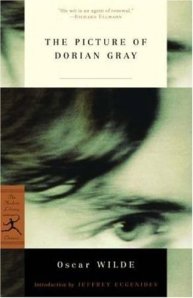
I just finished reading “The Picture of Dorian Gray” by Oscar Wilde. The story is about obsession and how far one is willing compromise his integrity, his worth for the superficiality of physical appearance. Dorian Gray had his portrait done by a painter, Basil Hallward, who was infatuated with the young man and as a result produced one his finest works ever. Gray meets Lord Henry, a friend of Hallward, who shares his somewhat self-indulging world views which lead to Gray’s moral decline. The disintegration of Gray’s values shows up in the portrait while none leaves its mark on his youthful face that remained so even as the years go by
It is not realistic, but the underlying theme is brutally factual. It goes to suggest that perhaps all of us have our own “portraits”, a side hidden from the world, a side that bears all our doings, the grudges we hold, the gossip we spread, the discontentment we harbour. We hide this under lock and key, not willing to confront who we truly are, seeking consolation in the perfect canvas we present to the rest of the world, basking in compliments, fueling our expanding ego to leave no room for guilt and repentance.
Gray was afraid to face his nemesis, as we are all when it boils down to confronting the less-than-perfect self, and so, he had to learn the tragic way. His obsession with undoing his wrong led to a vicious cycle of heinous crimes.
Scars are there to remind us how not to inflict the same wound again, it doesn’t go away with precaution or change of methods. Such only serves to aid prevention.
Perhaps if we do not focus on what has already been done, it becomes a lot less about undoing and more about progressing. One good deed will not erase the malice, but it does get us into the cycle of goodness.
Crawling with Single Crochet
Having attended Peranakan beading class in preparation for “Little Nonya”, it somewhat stimulated my interest in needlework. I wouldn’t say it was a pastime left in the cold, because frankly, I never started. So in my attempt to compensate my lack of talent in holding needles and putting them through fabric (so that I won’t look too clumsy in the drama), I picked up a cross-stitch which I left aside uncompleted 9 months ago, and spent 2-3 hours every night practising my stitches. It’s different from beading of course, but at least I make peace with the needle.
Lo and behold! I’m now addicted to not just cross-stitching, but also crochet and patchwork. Some time back, I put up a post featuring my first attempt at crochet, I was so displeased with it, I decided to pull the knots out and start from scratch. I want to make sure I get my stitches neat and nice. This is the most boring part, because you don’t see anything materialise other than rows and rows of stitches, but I guess the quality of stitching is important to me, especially since I am learning from scratch. Without good basics, I probably won’t go very far with the crochet projects.
As with picking up any new skill, we got to learn to crawl before we can run.
So I began with single crochet + turning chain, which will give you a flat rectangular piece like the one below. Depending on the number of chains, the size of the piece will differ.

Now at least this looks decent.
I had to pull out the piece five or six times because upon closer inspection, the knots were not uniformed. Sometimes the needle had caught stray fibres, or went into wrong spaces without my realisation, so it wasn’t a nice flat consistent piece.
My mother has passed my single crochet.
Next, I’d be learning half double crochet and double crochet.
Heartbreaking movies
Theme: “Heartbroken”
Movies to watch:


Love is never absent.
If you notice the novel you’re reading, the song you’re listening, the movie you’re watching, it’s there.
Since it’s so prevalent in the creative works around us, I am puzzled when anyone says love is secondary. It seems that the very act of undermining its importance is the erection of a bulwark against lonliness and fear of distraction or maybe even a consolation for its absence.
The theme of “being heartbroken” is greatly explored in “My Blueberry Nights”, (although I must say with all the close-up shots of the blueberry pie and melted ice-cream, it’s definitely putting me off blueberry pie for some time), and it’s interesting that all the characters come together in the movie binded by this same emotion, while being trapped in their own circumstances.
It’s like stepping into quicksand, the more you struggle, the deeper and faster you sink, yet even if you cease moving, you’re neither saved nor safe.
Beyond News Awards
Recently I attended MediaCorp New Awards at Swissotel and was deeply reminded of those years in journalism school a couple of years back. The relentless pursuit of scoops, intimate probings of interviewees, all with the ultimate aim of making it THE STORY.
Why was it so important? To inform and educate our citizens? To influence government policy? To change the world? Sure, those were the ideals that accompanied me through my undergraduate years, but in retrospect, they do sound a tad too noble. That does not mean I undermine the important role journalists play in our lives, because I was one of those who unanimously nodded when Chairman Mr Ho Kwon Ping said news-makers work long hours and get very little pay. So I derive that anyone who is overworked and underpaid must have a reason for accepting this sort of fate.
At the back of my head, passion was beckoning me.
Passion fuels the work you do and oils the desire to improve to get better at what you’re doing. It’s less about slipping into the monotony of assignments and deadlines, doing what is required and more about adopting a broader and more constructive perspective that is both enriching for self and inspiring for others.
Beyond the glitz and glamour of the awards that night, I found an important catalyst for self-progress.


 C'est Belle
Arbitrary? Or not quite so?
July 13, 2008 at 3:29 pm · Filed under Writing and tagged: civil issues, commentary, F1, jaytalking, opinions, singapore issues, singaporeans, sloppy dressing, straits times 12 july 2008, Youth Olympics
Last Sunday, it was a story on Singaporeans’ sloppy sense of dressing style; this week, it’s a story on how Singaporeans hog electrical sockets at fast food chains, the drop in swimming standards among young swimmers and “If Google is making us stupid”. (By Jeremy Au Yong, Straits Times Life section, 12 July 2008. Based on original article by Nicolas Carr.
Put these together, and we sure sound like a bunch of lackadaisical, materialistic, disgruntled and complacent people.
For a country that wants to play host to international events like the F1 and the Youth Olympics, maintain a strong, righteous political reputation and balance the needs of its citizens with that of its macro goals, the fundamentals of its human fabric seems to be lagging far behind.
Excuses are given for the lack of social decorum. The Internet has contributed vastly to media liberalisation, variety programmes on local free-to-air and cable television offer plenty of style and dress tips, yet we have not appropriated such information to our presentation and would rather attribute it to the weather and geographical position of our country. It’s as if if the reason is something bigger and beyond our control, we are much more consoled into justifying our carelessness. (“I can’t help dressing like that because it’s too hot to wear anything else.”)
Hmm..even to the Esplanade Theatre?
It isn’t even about being the most fashionable, or the most glamorous city, because if we are not strong on the basics of dressing appropriately, it is unlikely that we’ll find the Paris or Milan styles localised. Perhaps some might find this rather prejudiced, because my profession enables me to receive expert advice on wardrobe pairings so it is easier said, but I have also seen many young people who make an effort, and have better sense of style than I do.
That is not to encourage willful and hefty spendings on fashion items because I do not advocate meretricious purchases. Beyond the embarrassing and somewhat superficial discussion on dressing, it is fundamentally about respect and social behaviour, not creativity or fashion idealism.
Then there’s the hogging of electrical sockets at public places. I can understand the need for study/discussion space away from office and home, but I am appalled to read that there are patrons who ignore the requests of others to share. Are we breeding citizens with pinhole perspectives who only care about themselves and what is convenient to them? Anything that requires circumvention or sacrifice is slapped with unhappiness, discontent and complaint?
But wait, it is not all that bleak. The idea that there’s a drop in swimming standards seem to suggest that there was a time it was at its peak.
Perhaps the objective of the NASSA test is flawed, because excelling in survival skills in the swimming pool does not equate to swimming proficiency, but excelling in swimming proficiency would mean the basic survival skills (to cope with swimming pool conditions at least) are in place.
After all, you can’t blame the candidates for merely meeting the requirements of the test while neglecting the proficiency aspect, because no one told them right?
And if you’ve actually made it this far with my arbitrary article, I guess there is a fallacy in Nicholas Carr’s argument.
Comments (18)